
Fire extinguisher servicing and labelling: All you need to know.
All employers are expected to meet the requirements of the Regulatory Reform (Fire Safety) Order 2005. Among the details contained therein are the regulations and advice on fire extinguishers in the workplace: the types, the number you should position, on and in, the works premises, and the rules regarding servicing and labelling.
How many extinguishers do I need?
The number of fire extinguishers you will need depends on the size of your premises and whether you operate in a low or high risk business. A risk assessment should be carried out to determine the exact number you should install.
How often should Fire Extinguishers be serviced?
It is recommended that all fire extinguishers are serviced periodically, at least annually; although it is recommended monthly tests should also be carried out in-house to check the extinguisher’s tamper proof seal remains intact and that the internal pressure meets the minimum, acceptable level.
How are extinguishers serviced?
Fire extinguishers are pressurised and can explode when they become damaged or corroded, causing serious injury and even death. Checks include:
- The operating instructions are firmly attached, clean and legible.
- There is no obvious damage to the extinguisher.
- The nozzle or any other parts are not obstructed or damaged in any way
- The extinguisher has an acceptable reading indicated in the pressure gauge.
- The seals or tamper indicators are not broken or missing.
- Fire extinguishers should be pressure tested periodically to ensure that the cylinder is safe to use.
Who can carry out Fire Extinguisher Servicing?
Fire extinguisher servicing should only be carried out by a trained, competent person with adequate experience and knowledge in order for them to carry out the task responsibly.
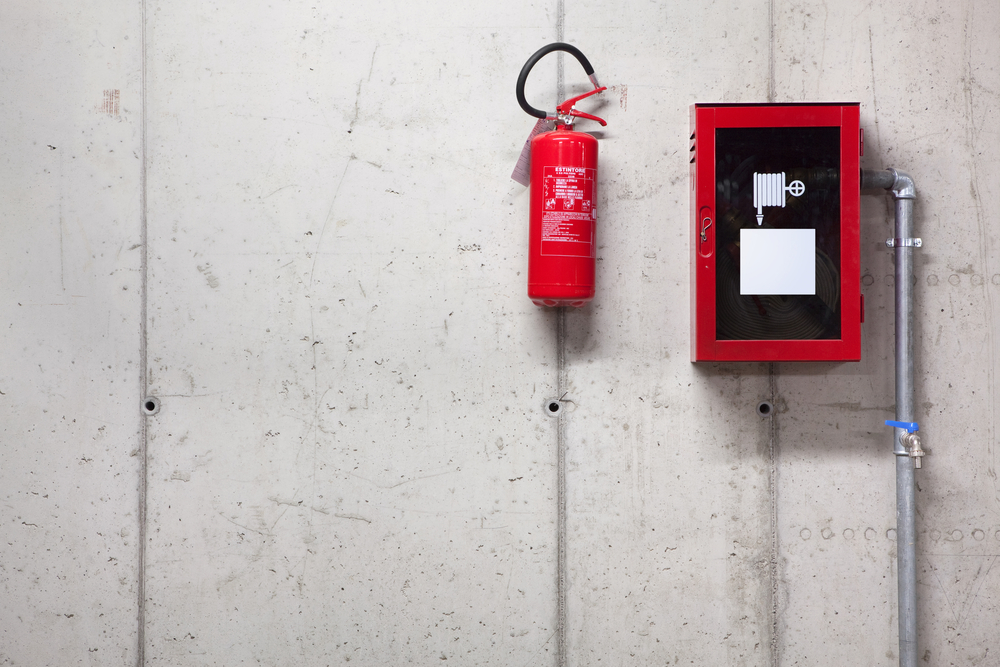
What specific type of fire extinguisher do I need?
Again, this will again depend on the type o business you’re in, and the specific risks associated with your premises. But here are the four main types:
Solid combustible materials
Water fire extinguishers are rated class ‘A’ and are only suitable for tackling fires involving solid combustible materials such as wood, paper and textiles. Water should not be used when tackling fires involving electrical equipment as water is a conductor.
Flammable Liquids
CO² fire extinguishers are rated class ‘B’ and originally designed for use on fires involving flammable liquids. As CO² is not a conductor of electricity, they are also used for electrical fires, but care must be taken because it is an asphyxiant and therefore dangerous to personal health when used in confined spaces.
Flammable gases
Extinguishers used for fires involving flammable gases, such as natural gas, methane, propane, hydrogen, and acetylene, are rated class ‘C’.
Flammable metals
Fires involving combustible metals such as, lithium, magnesium, aluminium, sodium, potassium, and their various alloys, class ‘D’ fire extinguishers are used.
Combustible cooking
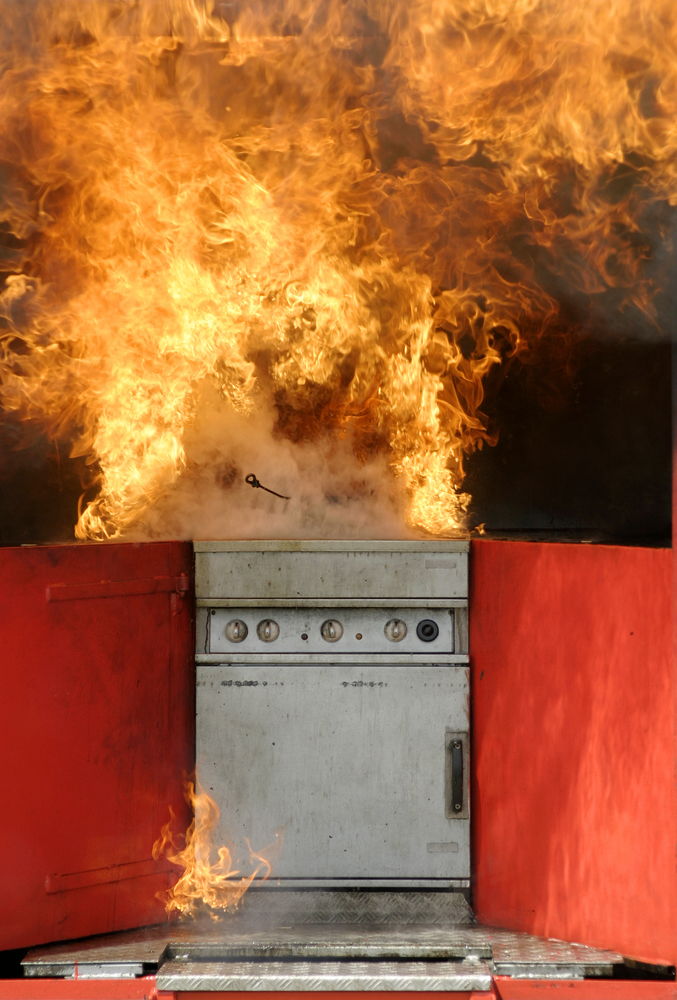
Combustible cooking fires require a special wet chemical extinguishing agent. Oil residues and grease are commonplace in catering and commercial kitchens and have the ability to reach extremely high temperatures and can re-ignite easily.
Fire extinguisher labelling
The testing and maintenance of fire extinguishers is essential and required by law to ensure they work if and when they’re ever needed. Following these activities the extinguisher must be labelled appropriately to confirm their fitness for purpose.

Labelling must be attached to the extinguisher and should contain such information as, when it was tested, by whom and the next test due date. Failure to comply with these regulations is in contravention of the applicable regulations, and could lead to prosecution under the Health and Safety at Work act.
Comments are closed here.