
Waste management is now one of the UK’s most dangerous industries. Learn why.
One of the UK’s most hazardous industries to work in is the management and recycling of the country’s waste: a staggering 228 million tonnes+ every year. It employs over 160,000 people nationwide which is about 0.5% of total employees. However, of overall workplace injuries that were reported, a staggering 2.6% came from the waste management industry alone, an astounding 832,000.
The Health and Safety Executive (HSE) reported that in the period 2009/10 to 2013/14, 40% of reported injuries were due to falls, slips and trips. And, being hit by a vehicle accounted for almost three in ten fatalities. The details in this report highlight the fact that the waste management industry’s safety record is not good. However, this could be greatly improved with the correct training and the proper safety procedures.
But risk goes with the job. The vast range of materials and substances that employees collect from commercial concerns as well as private households means they can come into contact with almost anything on a day to day basis, surprises as well as shocks are routine to many workers.

Some of the threats to employees’ health and well being will be readily visible and identifiable, and learnt through training, but there are other, hidden dangers, that pose threats also as well as injurious to the environment.
This is why The Waste (England and Wales) Regulations 2012 states that all glass, metal, plastics and paper are collected separately, both from households and commercial premises.
All employers, including waste management business owners, have a duty of care to their employees, the environment, and anyone else that may be affected as a result of their business operations.
As waste management and recycling industries are now classed as some of the most dangerous to work in, responsible employees usually take a proactive approach to their responsibilities and invest both time and money into running a tight ship.
The hazards to be found in the waste management business are many and varied, with one of the biggest threats coming from on-site traffic. Waste management sites are often large, busy spaces, where employees are continually exposed and vulnerable when waste is being delivered and collected. Poor weather conditions can impair visibility and hearing making risky hazards with tippers and front or rear end loaders continuously on the move.
And then of course there is the waste itself! Daily, waste workers run the risk of being exposed to diseases and injury such as;
- Hazardous chemicals, toxic materials, infected substances.
- Diseases, such as hepatitis, HIV.
- Musculoskeletal disorders.
- Needle sticks injuries.
- Trip, fall, slip, impact, noise.
And this list is far from complete!
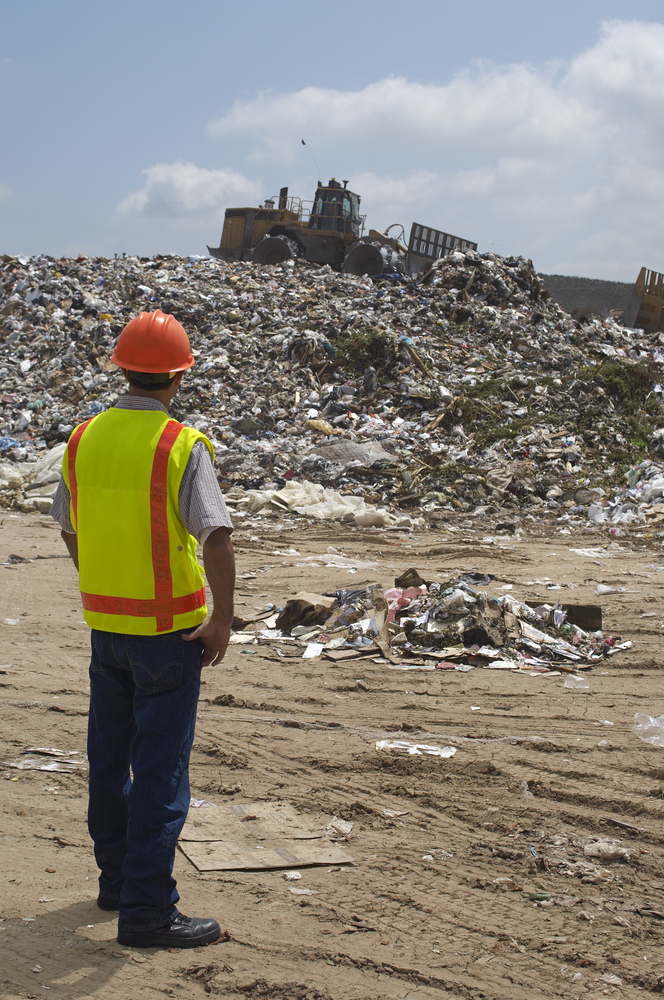
So what can, and is being done to make the industry safer?
As an identified high risk industry, waste management is under the spotlight, with ever watchful eyes monitoring what’s going on and looking to see fewer entries in the accident book, and less compensation claims in the courts.
This has led to operators organising and implementing a range of measures and procedures in order to comply with regulations and improve their overall safety rate. Accordingly, more waste operators are addressing employee health issues in far greater detail, including;
- Detailed risk assessments of all relevant operational activities and issue of appropriate personal protective equipment.
- Detailed analysis of findings, and the implementation of corrective actions and improvements.
- Induction and ongoing job training.
Employee health monitoring and screening.
Obtaining the necessary reductions in injury and fatality rates are achievable, and will be achieved by efforts of a committed management, together with a willing, trained, and motivated workforce, and an occasional prompt from the ever diligent HSE.
Label Bar stock & supply a wide range of Waste Management Labels, perfect for use in industry.
Comments are closed here.